Cosmic Trigger
3 books
The Cosmic Trigger series by Robert Anton Wilson has 3 books. Start with Cosmic Trigger (1977), then read the rest in the order below.
Cosmic Trigger reading order
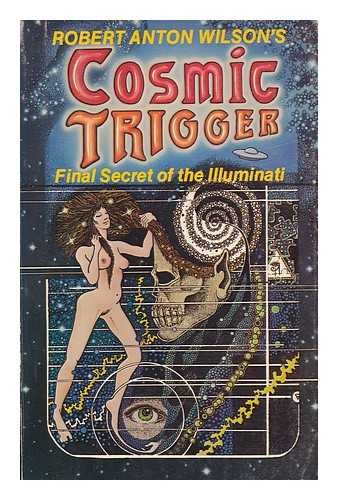
Cosmic Trigger
Robert Anton Wilson
Part memoir, part philosophical inquiry, and part expedition into the occult and the unknown, this groundbreaking work chronicles an experiment in radically reshaping perception. Moving through conspiracy theories, extraterrestrial contact, altered states, Sufism, parapsychology, and the legacy of Timothy Leary, it challenges readers to distinguish their maps of reality from reality itself. With characteristic wit, skepticism, and intellectual playfulness, the author presents “model agnosticism”—the willingness to consider competing explanations without mistaking any one of them for absolute truth. The result is an adventurous meditation on consciousness, belief, and the strange boundaries of human experience.
Down to Earth
Robert Anton Wilson
A provocative exploration of consciousness, belief, and the hidden assumptions that shape everyday reality, this work brings Robert Anton Wilson’s characteristic curiosity and skepticism down to practical, earthly concerns. Drawing on science, psychology, philosophy, and cultural criticism, it challenges readers to question rigid ideologies while remaining alert to the limits of their own perceptions. Witty, irreverent, and intellectually adventurous, the book invites a more flexible way of thinking without offering easy answers.
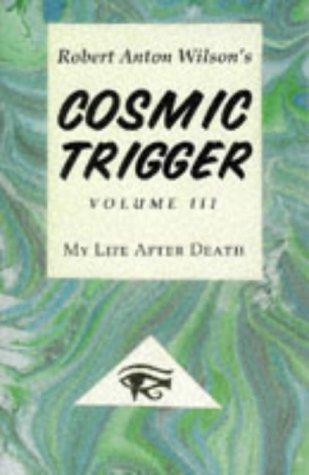
Cosmic Trigger 3: My Life After Death
Robert Anton Wilson
In this provocative concluding volume of an autobiographical and philosophical trilogy, a fabricated report of the author’s death becomes a springboard for examining truth, identity, and the unstable boundaries of reality. With characteristic wit and intellectual playfulness, the narrative ranges across synchronicity, UFOs, secret societies, quantum physics, black magic, popular culture, and the perils of unquestioned expert authority. Drawing on figures and ideas from Orson Welles and James Joyce to Buckminster Fuller and Philip K. Dick, it explores how perception, ideology, technology, and consensus shape what people accept as real. The result is an irreverent meditation on mortality and meaning that blends cultural criticism, speculative thought, and personal reflection.