Margellos world republic of letters book
8 books
Here are 8 books from the Margellos world republic of letters book series by Patrick Modiano and others, listed in series order where known and publication order otherwise.
Books in order
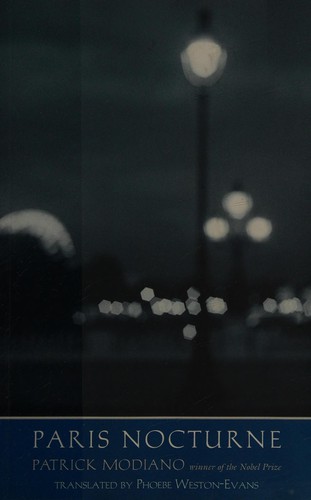
Paris Nocturne
Patrick Modiano
In the winter night streets of Paris, an unnamed young man’s life is jolted by an accident—he is struck by a car, and the moment fractures into a lingering search for meaning. As he recounts what happened, he drifts through half-remembered encounters and shadowy figures, piecing together a past that feels both intimate and strangely out of reach. With Modiano’s signature atmosphere—spare, lyrical, and quietly unsettling—the novel explores memory’s unreliability, the pull of anonymity, and how chance can rewrite identity. Blending noir-like suspense with introspective melancholy, it turns a single night into a haunting meditation on loss, guilt, and the stories we tell to survive the dark.
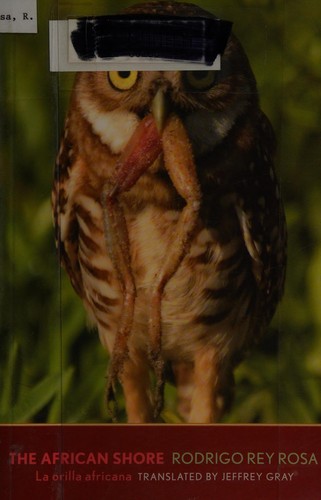
The African Shore
Rodrigo Rey Rosa
Set on the Moroccan coast in Tangier, this novel unfolds as two interlaced stories that circle the same emotional truth: two people can share a landscape and still never truly understand one another. Hamsa, a young shepherd with widening ambitions, is pulled into a role that tests his sense of purpose and belonging, while a second narrative follows a different figure whose life is shaped by duty, distance, and the limits of communication. As their paths twist together, the book explores how language, culture, and expectation can become barriers as real as geography. With Rodrigo Rey Rosa’s precise, lyrical storytelling and his talent for turning small encounters into lasting moral questions, the novel offers a haunting meditation on misrecognition, fate, and the quiet costs of wanting to be seen.
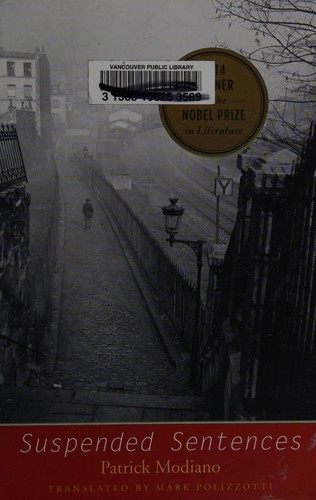
Suspended Sentences
Patrick Modiano
In Paris during the years surrounding World War II, these stories unfold through the fragile lens of memory, where names, places, and relationships drift in and out of focus. Across interconnected narratives, a narrator returns to childhood recollections—especially those shaped by a house of adults and friends—only to find that the past is never fully recoverable, and that what’s missing can be as telling as what remains. With a quiet, haunting intensity, the book explores how identity is formed by recollection, how secrecy and displacement linger beneath everyday life, and how the search for meaning can become its own kind of mystery. True to Patrick Modiano’s spare, lyrical style, the prose moves like a half-remembered walk through the city: intimate, elusive, and charged with the weight of history.
The Last Lover
Can Xue
In a surreal and unsettling landscape, characters navigate a labyrinth of desire, identity, and fractured relationships. As the boundaries between reality and fantasy blur, individuals grapple with the complexities of love, betrayal, and the search for connection in a world that defies easy explanation. This novel plunges into the darkest corners of the human psyche, exploring the elusive nature of intimacy and the profound impact of our deepest longings. Through a dreamlike narrative, the author crafts a disorienting yet compelling exploration of the human condition.
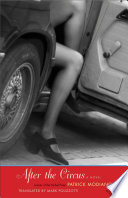
After the Circus
Patrick Modiano
In mid-sixties Paris, a young narrator—barely of age and still learning how the world works—finds himself drawn into a web of absence, uncertainty, and half-told stories. With his parents missing and his mother’s whereabouts shrouded in mystery, he navigates the city’s shifting streets and social shadows while forming a relationship with a slightly older, enigmatic figure. As their connection deepens, the novel explores memory, identity, and the quiet ways people search for meaning when the past refuses to stay still. Written in Patrick Modiano’s signature vein of lyrical restraint and atmospheric introspection, this is a haunting coming-of-age tale where longing and ambiguity become the true plot.
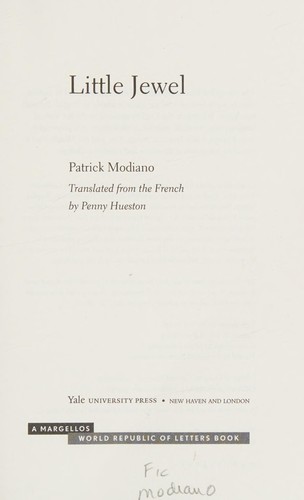
Little Jewel
Patrick Modiano
In a Paris that feels both intimate and indifferent, a young woman known by the stage name “Little Jewel” tries to stitch meaning back into a childhood she can barely recall. Abandoned by her parents and left to fend for herself, she drifts through the city’s nights and routines, babysitting for families who mirror her own sense of dispossession while clinging to fragments of memory as if they were clues. As her recollections flicker—half-formed, unreliable, and haunted—betrayal and longing surface, shaping her search for identity and for some human connection that might finally make her past cohere. With Modiano’s signature lyrical restraint and atmosphere of quiet dread, this is a profound meditation on memory’s power and its cruelty, told through the intimate voice of a narrator who refuses to let her story vanish.
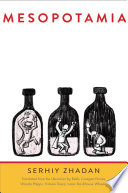
Mesopotamia
Serhiĭ Z︠H︡adan
In this collection, a celebrated Ukrainian voice offers a powerful and unflinching look at life in post-Soviet Ukraine. Through nine interconnected stories and accompanying poems, the author explores the disillusionment and complexities faced by ordinary people in a nation grappling with its past and uncertain future. Set in the vibrant yet troubled city of Kharkiv, these narratives weave a tapestry of stalled lives, the search for connection, and the often-perverse nature of love, all rendered with a unique blend of grit and magical realism. This is a profound testament to the resilience of the human spirit amidst political upheaval and societal change.
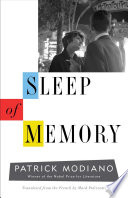
Sleep of Memory
Patrick Modiano
A haunting, beautifully woven novel of recollection and absence, this story follows a narrator drawn into memories that refuse to stay still—each recollection shadowed by disappearances, evasions, and sudden gaps in perception. As the past resurfaces in fragmented sensations, the narrative drifts toward uncanny, esoteric encounters that blur the line between what was lived and what is only half-remembered. With Modiano’s signature atmosphere—spare, lyrical, and quietly unsettling—the book explores how identity is shaped by what we lose, what we avoid, and what we can never fully recover. Ultimately, it’s a meditation on the strange comfort and danger of escaping memory, and on the eerie sleep in which the past continues to dream us.