

Mars Trilogy
4 books
The Mars Trilogy series by Kim Stanley Robinson has 3 books. Start with Red Mars (1992), then read the rest in the order below.
Mars Trilogy reading order
Red Mars
Kim Stanley Robinson
In 2026, humanity takes its greatest leap forward as one hundred colonists embark on an ambitious mission to terraform Mars, led by visionary pioneers John Boone, Maya Toitavna, Frank Chalmers, and Arkady Bogdanov. Drawing on meticulous scientific research, Kim Stanley Robinson weaves together the technological marvels of planetary engineering—from orbiting mirrors and polar ice manipulation to deep mantle drilling—with the deeply human drama of ambition, rivalry, love, and ideological conflict that emerges among those who will reshape an entire world. As some colonists pursue scientific breakthroughs that could revolutionize human biology and extend life itself, others seek to exploit Mars's resources, while still others fight desperately to preserve the planet's pristine wilderness. The first book in Robinson's acclaimed Mars Trilogy, Red Mars is an epic saga that explores not only the next step in human evolution, but the profound moral and political questions that arise when we attempt to remake a world in our image. Brilliantly imagined and breathtaking in scope, this novel creates an entire civilization from the ground up, presenting a future both glorious and troubling, complex and inspiring.
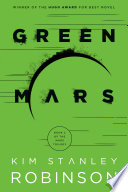
Green Mars
Kim Stanley Robinson
On a transforming Mars, the struggle shifts from survival to stewardship as new generations of settlers grapple with what it means to live on a world they are reshaping. This sweeping continuation follows a broad cast as political factions, scientific ambitions, and personal convictions collide—testing the limits of cooperation, the ethics of terraforming, and the meaning of “home” when a planet is still becoming itself. With its grounded science and richly textured character work, the novel explores themes of environmental responsibility, ideological conflict, and the long, incremental nature of change. Kim Stanley Robinson’s distinctive, detail-forward style turns planetary engineering into a deeply human drama, inviting readers to consider whether humanity’s greatest power is also its greatest obligation.
Blue Mars
Kim Stanley Robinson
Mars is no longer a dream of red dust and desolation; it is a vibrant, terraformed world teeming with life and possibility. Yet, as the red planet flourishes, Earth faces an ecological crisis and the crushing weight of overpopulation, turning Mars into a potential sanctuary for humanity. This burgeoning hope ignites a fierce debate and the seeds of interplanetary conflict between those who wish to preserve Mars's wild beauty and those who seek to reshape it further. The future of both worlds hangs precariously in the balance, as humanity grapples with its destiny among the stars.
The Martians
Kim Stanley Robinson
Blending short stories, historical fragments, poems, and speculative documents, this richly imagined volume expands a landmark vision of humanity’s future on Mars. Across generations, settlers transform the planet from a remote outpost into a complex society shaped by scientific discovery, political struggle, cultural change, and the difficult question of whether Mars should be preserved or remade. The varied narratives explore revolution, governance, ecological responsibility, corporate power, communal life, and the enduring tensions between independence and connection to Earth. Ambitious, nuanced, and deeply attentive to both human ideals and their consequences, the book offers a multifaceted portrait of a world—and a civilization—in the process of becoming.