
Palliser Novels
6 books
The Palliser Novels series by Anthony Trollope has 6 books. Start with Can You Forgive Her? (1864), then read the rest in the order below.
Palliser Novels reading order
Can You Forgive Her?
Anthony Trollope
Anthony Trollope masterfully weaves together the intertwined fates of three women navigating the complex landscape of love, marriage, and societal expectations in Victorian England. The narrative centers on the spirited Alice Vavasor, whose headstrong decisions and past romantic entanglements prompt the central question of forgiveness. Alongside Alice's journey, readers are drawn into the parallel stories of her cousin Glencora and aunt Arabella, each facing their own trials in courtship and commitment. Trollope's keen social observation and nuanced character portrayals explore themes of independence, duty, and the often-difficult choices women faced in securing their futures.
Phineas Finn
Anthony Trollope
Phineas Finn, a young Irishman newly admitted to the bar, finds himself at a crossroads when presented with an unexpected opportunity to enter Parliament. This novel chronicles the ambitious rise and subsequent fall of this charming protagonist as he navigates the complex and often treacherous world of 19th-century British politics. Trollope masterfully explores themes of ambition, social climbing, love, and the often-unforeseen consequences of political life, offering a keen insight into the societal structures and personal compromises of the era.
The Eustace Diamonds
Anthony Trollope
In Anthony Trollope's satirical masterpiece, the beautiful and enigmatic Lizzie Eustace inherits a magnificent diamond necklace upon her husband's death, setting in motion a captivating tale of deception and societal maneuvering. This novel delves into the complex interplay of money, marriage, and morality in Victorian England, contrasting Lizzie's cunning schemes with the steadfastness of others. Trollope masterfully explores how wealth, or the lack thereof, shapes relationships and influences one's standing in society, even when faced with questionable actions. As Lizzie fights to keep her coveted jewels, the narrative offers a sharp commentary on the era's social dynamics and the often-unscathed rise of those who navigate it with dubious means.
Phineas Redux
Anthony Trollope
Once a rising political figure, Phineas Finn now lives a quieter life as a widower after the death of his wife, Mary, in childbirth. When former Liberal allies unexpectedly draw him back toward public life, he is pulled into the turbulent world of London politics—where alliances shift, reputations are currency, and truth is often contested. His return is tested by a devastating false accusation and a consequential trial tied to the murder of a political rival, forcing Phineas to navigate both courtroom scrutiny and the darker motives behind political power. With Trollope’s sharp eye for character and social detail, this novel explores themes of justice, public perception, loyalty, and the cost of ambition in a society that judges before it understands.
The Prime Minister
Anthony Trollope
In this masterful political novel, Anthony Trollope plunges readers into the intricate world of 19th-century British governance and high society. The story follows Plantaganet Palliser, the Duke of Omnium, as he navigates the treacherous waters of leading a coalition government, a role that tests his resolve and his marriage. Alongside the political machinations, a compelling secondary plot unfolds concerning Ferdinand Lopez, an ambitious social climber whose aspirations intersect with the Duke's life in unexpected ways. Trollope brilliantly dissects the complex interplay between personal ambition, marital dynamics, and the often-unseen forces that shape political power, offering a sharp and enduring commentary on human nature and societal structures.
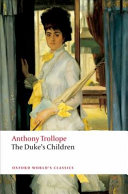
The Duke's Children
Anthony Trollope
In the final installment of Anthony Trollope’s acclaimed Palliser series, the Duke’s household becomes a battleground of affection, duty, and social expectation. As his children pursue marriages of their own choosing—against the Duke’s carefully measured plans—scheming, persuasion, and misjudgment ripple through drawing rooms and family councils alike. Blending the sharp social observation of Victorian politics with a more intimate, almost Austen-like focus on romance and class, the novel explores how love collides with inheritance, reputation, and the power of parental consent. With Trollope’s characteristic wit and humane realism, the story turns on the question of whether a family can truly govern the future—or whether the heart will find its own way.