Popular Political Science Books
The political science books Readstead readers shelve most, out of 471 in the catalog.
- 1

1984
George Orwell · 1948
3.8 · 6 ratingsIn a totalitarian future where history itself is rewritten to serve the state, Winston Smith, a disillusioned Party member, begins to question the oppressive regime that controls every aspect of his existence. Haunted by the Party's relentless manipulation of truth and desperate to find allies in a shadowy underground resistance, Winston embarks on a dangerous journey that will test the limits of his courage and conviction. This chilling masterpiece explores the terrifying power of authoritarian control, the fragility of individual thought, and the human cost of living under constant surveillance in a world where freedom has become a forgotten concept. Orwell's prescient vision remains strikingly relevant, offering a haunting meditation on the nature of power, truth, and resistance that continues to resonate with readers across generations.
- 2
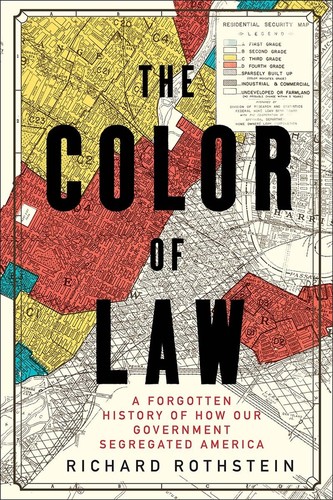
The Color of Law
Richard Rothstein · 2017
In this landmark work, Richard Rothstein traces how American housing segregation was not simply the result of individual prejudice or market forces, but was actively produced through government policy. Drawing on historical evidence, he shows how federal, state, and local decisions—ranging from lending practices to zoning and public housing—systematically shaped where people could live and accumulate wealth. The book follows the long-term consequences of these choices, illuminating how “separate and unequal” became embedded in everyday life and continues to influence opportunity today. With rigorous research and a clear, persuasive narrative, Rothstein challenges readers to rethink the roots of inequality and confront the enduring power of law in structuring social outcomes.
- 3

Stamped from the Beginning: The Definitive History of Racist Ideas in America
Ibram X. Kendi · 2016
4.5 · 2 ratingsTracing the evolution of racist thought in America from the nation’s earliest foundations to the present day, this definitive history follows how ideas about race were invented, justified, and institutionalized. Through a sweeping, evidence-driven narrative, it shows how influential thinkers and social movements shaped public policy, education, and everyday life—often by disguising prejudice as “science,” morality, or common sense. At its core, the book examines the mechanisms of power behind racial hierarchy and challenges readers to confront how language and ideology can manufacture inequality. Written in Ibram X. Kendi’s incisive, accessible style, it blends historical scholarship with urgent moral clarity to illuminate why racist ideas persist—and what it takes to dismantle them.
- 4

The Fire Next Time
James Baldwin · 1963
4.5 · 2 ratingsA seminal work of American literature, this powerful collection of two interconnected letters confronts the devastating legacy of racism in America with unflinching honesty and eloquent prose. Written as a meditation on the author's own journey through Harlem and the broader struggle for racial justice, the work serves as both a deeply personal testimony and a clarion call for national reckoning. Through searing examination of systemic injustice and its psychological toll, the author challenges both Black and white Americans to confront uncomfortable truths and imagine a path toward genuine equality. Blending the cadence of a sermon with the urgency of an ultimatum, this landmark text became a defining voice of the civil rights movement and remains essential reading for understanding America's ongoing struggle with race. A masterwork of moral clarity and literary brilliance that continues to resonate across generations.
- 5

The Republic
Plato · 2003
5.0 · 1 ratingPlato's seminal work, "The Republic," offers a profound exploration of justice, the ideal society, and the nature of the soul. Through the Socratic method, Plato constructs a blueprint for a utopian state, meticulously detailing its governance, education system, and the roles of its citizens. This philosophical dialogue delves into the fundamental questions of ethics, politics, and metaphysics, examining the philosopher's crucial role in achieving societal harmony and individual well-being. The text also critically assesses the influence of art and poetry on character, presenting a timeless argument for the pursuit of truth and the good life.
- 6
Capitalist Realism: Is There No Alternative?
Mark Fisher · 2009
4.0 · 1 ratingIn the wake of 1989—and intensified by the financial crisis of 2008—capitalism has come to present itself as the only “realistic” option, shaping not just economies but everyday imagination. Mark Fisher explores this condition as a lived ideology, tracing how politics, popular culture, work, and education absorb and reproduce the sense that there is no alternative. With sharp critical insight, he argues that capitalist realism is riddled with contradictions and “glitches” that reveal its instability beneath the surface of inevitability. Part cultural critique and part philosophical provocation, the book’s distinctive style blends theory with vivid examples to challenge readers to rethink what realism can mean—and what futures might be possible.
- 7
Freedom is a Constant Struggle: Ferguson, Palestine and the Foundations of a Movement
Angela Y. Davis · 2016
4.5 · 2 ratingsIn this powerful collection, Angela Y. Davis, a towering figure in activism and scholarship, draws urgent parallels between the fight for justice in Ferguson and the enduring struggle for Palestinian liberation. Through incisive essays, interviews, and speeches, Davis reveals the deep historical roots of state-sponsored violence and systemic oppression. She masterfully connects contemporary movements to a global continuum of resistance, offering a profound analysis of how solidarity can forge a path toward true freedom. This book is an essential read for anyone seeking to understand the interconnectedness of liberation struggles and the foundational principles of a global movement for justice.
- 8

Heretics of Dune
Frank Herbert · 1984
3.8 · 2 ratingsMillennia after the events of the original Dune saga, the universe faces a new crisis as the planet Rakis—once the desert world of Arrakis—begins its transformation back into barren wasteland, and the legendary sandworms that shaped civilization itself face extinction. The Lost Ones, scattered across the far reaches of space, return home to confront a world transformed by time and the consequences of their ancestors' choices. In this fifth installment of Frank Herbert's epic saga, a new generation awakens to power, armed not with the political machinations and prescient abilities of their forebears, but with a revolutionary force that challenges the very foundations of the Imperium: the heretical power of love. As ancient prophecies collide with new realities, the fate of humanity hangs in the balance between the dying old order and an uncertain future. Herbert's masterwork explores themes of evolution, redemption, and the transformative potential of human connection in a universe where power itself must be redefined.
- 9
Industrial Society and Its Future
Theodore John Kaczynski · 1995
4.0 · 1 ratingThis seminal work, also known as the Unabomber Manifesto, presents a radical critique of modern industrial society and its technological advancements. The author argues that industrialization and its consequences have profoundly disrupted human life, leading to widespread psychological suffering and environmental degradation. The text delves into the nature of power processes, the concept of the "surrogate activity," and the perceived loss of freedom and autonomy in contemporary civilization. It serves as a stark and controversial examination of the societal structures that shape human experience and the potential costs of unchecked technological progress.
- 10
Invisible Women: Data Bias in a World Designed for Men
Caroline Criado Pérez · 2019
From medical research to urban planning, from workplace design to artificial intelligence, the world is built on data that systematically excludes women. In this groundbreaking investigation, Caroline Criado Pérez reveals how the pervasive bias in data collection and analysis has created a world that works against half the population—often with dangerous consequences. Through compelling case studies and meticulous research, she exposes how women's health needs are overlooked in clinical trials, how crash test dummies designed for male bodies put female drivers at risk, and how algorithms trained on male-dominated datasets perpetuate gender inequality. This eye-opening work challenges readers to recognize the invisible gaps in our understanding and demands a fundamental reckoning with how we gather, interpret, and act on data. Essential reading for anyone who wants to understand the hidden architecture of gender bias in modern society.
- 11
Gandhi: An Autobiography
Mohandas Karamchand (Mahatma) Gandhi · 1927
4.0 · 1 ratingThis candid autobiography traces the author’s life from childhood and early legal training through the experiences that shaped his philosophy and public work. Framed as a series of “experiments with truth,” it explores the development of his commitments to nonviolence, self-discipline, religious tolerance, social justice, and moral responsibility. Rather than presenting a polished heroic portrait, the narrative examines personal doubts, failures, and transformations with remarkable honesty. Both a compelling life story and a profound reflection on the relationship between ethical conviction and social change, it offers insight into the ideas that would influence movements around the world.
- 12
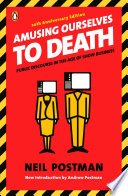
Amusing Ourselves to Death: Public Discourse in the Age of Show Business
Neil Postman · 1985
4.0 · 2 ratingsIn this prescient examination of media's impact on public discourse, Neil Postman argues that the rise of television has transformed serious subjects into mere entertainment. He contends that this shift, where politics, news, and education are increasingly shaped by the demands of show business, poses a profound threat to informed public life. Originally published in 1985, Postman's work remains remarkably relevant, offering a critical lens through which to view our contemporary media landscape and its potential to trivialize important conversations. This seminal work serves as a powerful warning and a call to reclaim our media for more meaningful purposes.
- 13
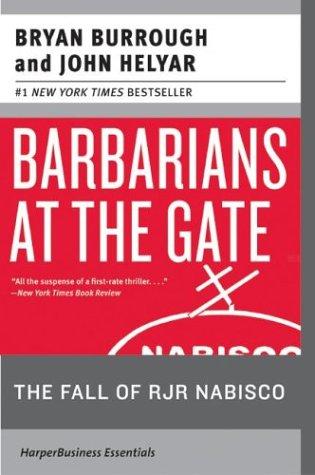
Barbarians at the Gate: The Fall of RJR Nabisco
Bryan Burrough · 1990
In this gripping account of corporate ambition and financial excess, Bryan Burrough and John Helyar chronicle the dramatic leveraged buyout of RJR Nabisco, one of the largest and most contentious deals in business history. Through meticulous investigative journalism, the authors expose the ruthless maneuvering, staggering sums of money, and larger-than-life personalities that collided in this high-stakes battle for control of a tobacco and food empire. The narrative captures the era's unbridled greed and the complex web of dealmaking that would reshape corporate America, offering readers an insider's view of how ambition and self-interest can override prudence and ethics. A masterwork of business storytelling, this enduring bestseller remains a cautionary tale about the dangers of unchecked corporate power and the human cost of financial engineering. With a new afterword reflecting on the deal's legacy, this classic work continues to resonate as essential reading for understanding modern capitalism's excesses.
- 14

Chapterhouse: Dune
Frank Herbert · 1985
3.8 · 2 ratingsIn the aftermath of Arrakis's destruction, the Bene Gesserit sisterhood has seized control of their destiny by colonizing a lush green world—only to begin transforming it into a desert through their own deliberate design. This final novel in Frank Herbert's legendary Dune saga explores the ultimate consequences of power, survival, and the manipulation of worlds as the ancient order pursues their long-term vision for humanity's future. With themes of ecological transformation, political intrigue, and the clash between human ambition and natural forces, Herbert crafts a thought-provoking conclusion that expands the scope of his epic universe. The narrative weaves together complex philosophical questions about control, adaptation, and the price of immortality with the sweeping grandeur that defines the series. A stunning and definitive capstone to one of science fiction's most influential sagas, written by Herbert in the final years before his death.
- 15
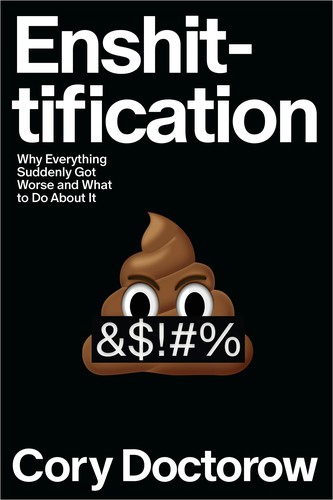
Enshittification: Why Everything Suddenly Got Worse and What to Do About It
Cory Doctorow · 2025
In *Enshittification*, Cory Doctorow diagnoses a phenomenon that feels all too familiar: the steady, inexplicable decline of the digital platforms we depend on daily. With characteristic clarity and energy, Doctorow traces how tech monopolies systematically dismantled the internet's early architecture of openness and interoperability—once the digital immune system that protected users and enabled competition—to create chokepoints of control and exploitation. The book explores the social, governmental, and financial guardrails that once prevented companies from degrading their products for profit, and how their removal has left users vulnerable to abuse. Through compelling examples and incisive analysis, Doctorow reveals that the decay you've noticed isn't imaginary—it's the result of deliberate corporate strategies designed to extract maximum value from users. *Enshittification* is both a reckoning with how we got here and a call to action for reclaiming the internet we deserve.
- 16
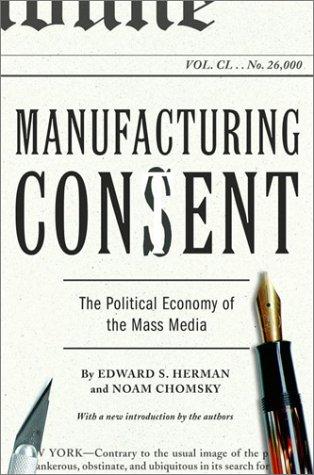
Manufacturing Consent: The Political Economy of the Mass Media
Noam Chomsky · 1988
4.0 · 2 ratingsIn this seminal work, Noam Chomsky and Edward S. Herman dissect the intricate mechanisms by which mass media in the United States functions as a powerful propaganda system. They argue that the spectrum of public discourse is deliberately narrowed, serving the interests of elite power structures rather than reflecting genuine public will. The authors introduce a compelling 'propaganda model' with five key filters—ownership, advertising, sourcing, flak, and anticommunism—to explain how news is shaped and disseminated. This critical analysis reveals how market forces, internalized assumptions, and self-censorship, rather than overt coercion, effectively manufacture consent among the populace.
- 17
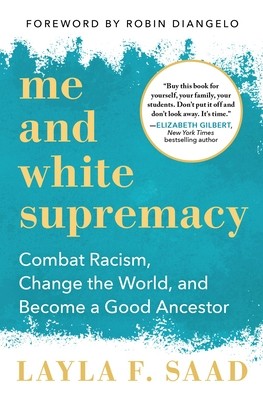
Me and White Supremacy: Combat Racism, Change the World, and Become a Good Ancestor
Layla F. Saad · 2020
This updated, expanded guide grew from Layla F. Saad’s viral #meandwhitesupremacy challenge, inviting readers to confront the everyday ways white supremacy can show up in thoughts, habits, and relationships. Through reflective prompts and practical exercises, the book helps you recognize and dismantle internalized privilege—so you can stop causing harm, even unintentionally, and learn how to support people of color with integrity. Saad’s approach blends personal accountability with actionable change, emphasizing what it means to become a “good ancestor” by choosing growth over defensiveness. Part memoir-adjacent and part toolkit for anti-racism, it offers a clear path for transforming individual awareness into meaningful, world-shaping action.
- 18

Permanent Record
Edward Snowden · 2019
5.0 · 1 ratingEdward Snowden's memoir, "Permanent Record," offers an unprecedented look into the life of the man who revealed the vast scope of global surveillance. From his early fascination with computers and his formative years in government service to his pivotal role as a whistleblower, Snowden recounts the events that led him to expose classified information about mass surveillance programs. This deeply personal account explores the ethical dilemmas of privacy in the digital age and the profound consequences of challenging powerful systems. Snowden's narrative is a compelling examination of conscience, technology, and the fight for individual liberties in an increasingly monitored world.
- 19
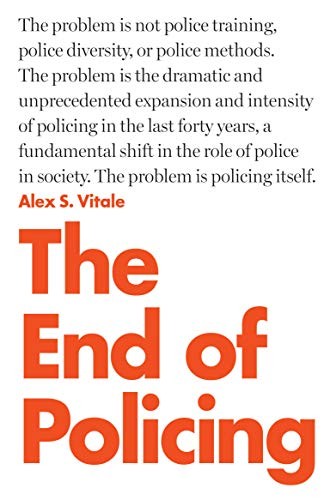
The End of Policing
Alex S. Vitale · 2017
4.0 · 1 ratingPolicing in the United States is often treated as a technical fix for social problems, but this book argues that the system itself is built to manage—rather than solve—inequality. Drawing on history, policy, and on-the-ground realities, it traces how modern policing expanded alongside mass incarceration and how “reform” efforts frequently fail to address the deeper drivers of harm. Vitale challenges readers to rethink public safety through the lens of abolitionist and community-centered alternatives, asking what justice would look like without relying on police as the default response. With a clear, urgent voice and rigorous argumentation, this work offers a compelling roadmap for transforming safety, accountability, and democratic life.
- 20
The Myth of American Idealism: How U.S. Foreign Policy Endangers the World
Noam Chomsky, Nathan J. Robinson · 2024
In this incisive and timely critique, Noam Chomsky and Nathan J. Robinson challenge the foundational myths of American foreign policy, exposing the gap between the nation's stated ideals of democracy and freedom and its actual global impact. Drawing on decades of analysis, the authors trace America's pursuit of dominance across pivotal conflicts—from the Israeli-Palestinian struggle to the wars in Iraq and Afghanistan—revealing how interventionist policies have consistently served elite interests while destabilizing regions worldwide. Rather than accepting the self-serving narratives promoted by U.S. political and corporate leadership, this book offers a rigorous examination of how American exceptionalism has become a dangerous ideology that endangers global stability. Accessible yet intellectually rigorous, this work serves as an essential introduction to Chomsky's lifetime of critical thought on U.S. imperialism and a call to reckon with the true consequences of American foreign policy. Urgent and provocative, it challenges readers to question the myths they've been taught and to understand the real-world human cost of unchecked American power.
- 21
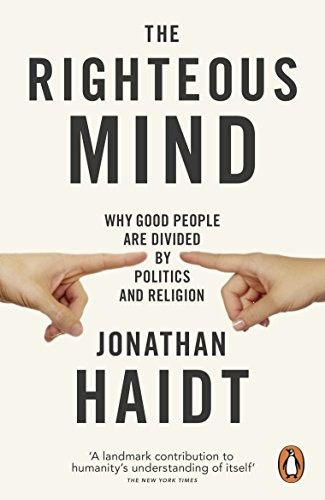
The Righteous Mind: Why Good People are Divided by Politics and Religion
Jonathan Haidt · 2012
4.0 · 1 ratingSocial psychologist Jonathan Haidt delves into the deep-seated reasons behind our political and religious divides, exploring how moral intuitions shape our perceptions and lead to righteous certainty. Blending his own research with insights from various disciplines, Haidt reveals that our evolutionary path has made us not just selfish, but fundamentally groupish. This inherent groupishness, he argues, drives our deepest joys, our most fervent beliefs, and our most intractable conflicts. Ultimately, Haidt offers a compelling framework for understanding these divisions and suggests a path toward greater civility and mutual understanding by recognizing the valuable insights each perspective brings.
- 22
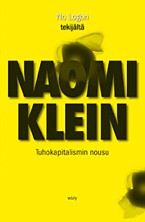
The Shock Doctrine: The Rise of Disaster Capitalism
Naomi Klein · 2007
In this groundbreaking work, Naomi Klein exposes the disturbing relationship between major crises and the implementation of radical free-market policies, coining the term "disaster capitalism" to describe this phenomenon. Through meticulously researched case studies spanning from Pinochet's Chile to post-invasion Iraq, Klein traces how governments and corporations exploit moments of shock—whether natural disasters, wars, or economic collapse—to push through unpopular neoliberal reforms that would never survive public scrutiny during normal times. Drawing on her investigative journalism and sharp analytical eye, Klein reveals the ideological underpinnings of this strategy and its devastating human costs across the globe. This powerful critique challenges readers to recognize the patterns of exploitation hidden beneath the rhetoric of economic progress and free markets. A essential examination of how crisis becomes an opportunity for the powerful to reshape society according to their vision.
- 23
We Were Eight Years in Power
Ta-Nehisi Coates · 2017
In this powerful collection of essays, the author reflects on the eight years of Barack Obama’s presidency and the enduring realities of race in America. Drawing on his earlier writing as well as new commentary, he examines the country’s political transformation, the legacy of slavery and segregation, Black identity, and the rise of a resurgent white nationalism. Personal, incisive, and historically informed, the book connects the Obama era to broader questions of power, progress, and the unfinished struggle for racial justice.
- 24

White Tears / Brown Scars: How White Feminism Betrays Women of Color
Ruby Hamad · 2020
A powerful examination of how mainstream feminism has too often centered white women while marginalizing, appropriating, or exploiting women of color. Drawing on history, media, politics, and personal experience, the book traces the deep roots of white feminism and its role in reproducing racial hierarchies, from colonialism to the present day. It challenges readers to confront the ways solidarity can become conditional and asks what a truly intersectional feminist movement would require. Provocative and incisive, the work offers both a critique of entrenched power structures and a call for more honest, inclusive forms of resistance.
- 25
12 Who Don't Agree
Valery Panyushkin · 2009
A compelling portrait of contemporary Russian dissent, this book introduces twelve individuals who challenge the political, social, and moral direction of their country. Through their personal stories, convictions, and acts of resistance, it explores the risks of speaking out and the diverse meanings of freedom, justice, and civic responsibility. Combining reportage with intimate biography, the work offers an insightful look at opposition in modern Russia and the human costs of refusing to conform.
- 26
Broke in America
Joanne Samuel Goldblum, Colleen Shaddox · 2021
A clear-eyed examination of poverty in the United States, this book reveals how millions of people can work hard and still struggle to afford food, housing, health care, and other basic necessities. Drawing on research, firsthand accounts, and years of experience, it challenges the myths and political assumptions that frame poverty as an individual failure rather than a systemic problem. The authors explore the policies, institutions, and economic forces that keep people financially insecure while highlighting practical pathways toward meaningful change. Accessible, compassionate, and urgent, the book offers both a deeper understanding of poverty and a call to build a more equitable society.
- 27
I Love Russia
Elena Kostyuchenko · 2023
A powerful collection of investigative reportage and personal essays, this book offers an intimate, unsparing portrait of contemporary Russia from the perspective of those living at its margins. Drawing on years of fieldwork, it explores corruption, poverty, political repression, social inequality, and the human cost of state power, while portraying the resilience and contradictions of ordinary people. The writing combines vivid narrative journalism with deeply personal reflection, illuminating a country shaped by both profound beauty and institutional violence. Together, these accounts challenge simplified views of Russia and ask what it means to love a homeland undergoing painful transformation.
- 28
Making Amends
Linda Radzik · 2009
This philosophical study examines what it means to make amends after wrongdoing, asking how individuals and societies should respond to harm, guilt, and moral responsibility. It explores the roles of apology, forgiveness, restitution, punishment, and reconciliation in repairing damaged relationships, while considering difficult cases involving collective and historical injustice. Bringing together moral philosophy, legal theory, and political thought, the book offers a careful account of atonement that is both intellectually rigorous and relevant to contemporary debates about justice and responsibility.
- 29
The Education of an Idealist
Samantha Power · 2019
This compelling memoir traces a journey from immigrant childhood and aspiring journalist to influential advocate for human rights and senior diplomat. Against the backdrop of crises in Bosnia, Rwanda, and beyond, it explores the moral urgency—and practical challenges—of confronting genocide, war, and political indifference. The narrative offers an inside view of American foreign policy and public service, while reflecting on leadership, compromise, family, and the enduring tension between idealism and power. Candid, thought-provoking, and deeply personal, it is both a portrait of a remarkable career and an argument for principled engagement in a complicated world.
- 30
They Came for the Schools
Mike Hixenbaugh · 2024
In this urgent work of investigative journalism, a wave of organized parents, activists, and political groups challenges public schools over race, gender, history, and the books students are allowed to read. Drawing on reporting from communities across the country, the book traces how local school-board disputes became part of a broader national movement—and examines the stakes for educators, families, and public education itself. Vivid and deeply reported, it offers a clear-eyed look at the forces reshaping America’s classrooms and the struggle over whose values schools should reflect.
- 31
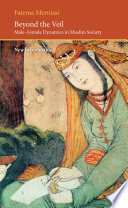
Beyond the Veil
Mernissi, Fatima. · 1975
Fatima Mernissi's groundbreaking work, first published in 1975, delves into the complex realities of women's lives within Islamic societies. Through a blend of sociological analysis and personal narrative, Mernissi challenges traditional interpretations of religious texts and cultural practices that have historically confined women. This seminal study offers a critical examination of the veil, the harem, and other social structures, revealing the resilience and agency of women who navigate these constraints. "Beyond the Veil" remains a vital and influential text for understanding gender, religion, and power dynamics in the Muslim world.
- 32
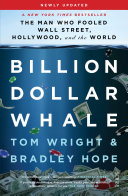
Billion Dollar Whale: The Man Who Fooled Wall Street, Hollywood, and the World
Tom Wright, Bradley Hope · 2018
4.0 · 1 ratingThis investigative account reveals how Jho Low, a charismatic social climber with no official title, helped turn Malaysia’s 1MDB investment fund into the center of an unprecedented global fraud. Drawing on extensive reporting, it follows the money through elite banks, political circles, luxury real estate, Hollywood productions, and extravagant international parties—while examining how powerful institutions repeatedly failed to act. More than a portrait of one audacious con artist, the book is a gripping exploration of greed, corruption, celebrity culture, and the vulnerabilities of the global financial system.
- 33
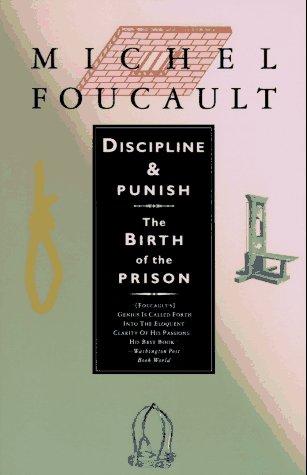
Discipline and Punish: The Birth of the Prison
Michel Foucault · 1975
Librarian note: an alternate cover for this edition can be found here.In this brilliant work, the most influential philosopher since Sartre suggests that such vaunted reforms as the abolition of torture and the emergence of the modern penitentiary have merely shifted the focus of punishment from the prisoner’s body to his soul.
- 34
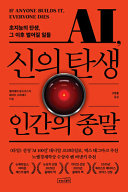
If Anyone Builds It, Everyone Dies: Why Superhuman AI Would Kill Us All
Eliezer Yudkowsky · 2025
3.0 · 1 ratingThe race to build superhuman artificial intelligence may be advancing faster than humanity’s ability to control it—and the consequences could be irreversible. Drawing on deep experience in the field, this urgent warning explains why systems far beyond human intelligence might pose an existential threat and why conventional safeguards may not be enough. It examines the technical, ethical, and political challenges surrounding AI development while urging leaders, researchers, and the public to reconsider the assumption that progress must continue at any cost. Clear-eyed and uncompromising, the book is a call to change course before the pursuit of artificial intelligence becomes a threat to human survival.
- 35
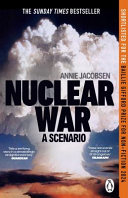
Nuclear War: A Scenario
Annie Jacobsen · 2024
5.0 · 1 ratingDrawing on interviews with military experts, scientists, and policymakers, this gripping work traces the consequences of a single nuclear missile launch from the first warning through the terrifying chain of decisions that follows. Presented in real time, it explores the pressures facing leaders, the limits of missile defense, and the devastating human and geopolitical costs of nuclear escalation. Rigorous yet intensely readable, the book offers a sobering examination of modern warfare, deterrence, and the fragile systems meant to prevent catastrophe.
- 36
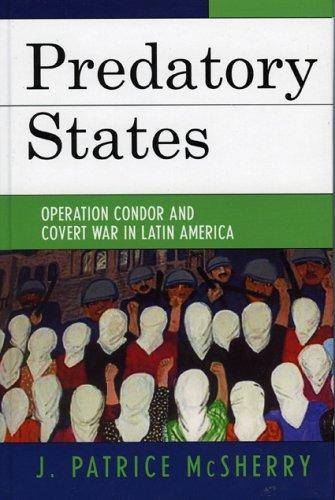
Predatory States
J. Patrice McSherry · 2005
In the wake of global conflict and shifting security priorities, this book examines how states can behave like predators—using power, secrecy, and coercion to pursue strategic goals while undermining law and accountability. Through rigorous analysis, it traces the mechanisms by which governments justify extraordinary measures, manage information, and target individuals and communities, revealing the political logic behind state violence and repression. Blending historical insight with a sharp focus on institutions and international norms, it explores themes of human rights, sovereignty, and the struggle to constrain power. Written with the clarity and analytical force of a leading scholar, it offers readers a framework for understanding not only what happens when states overreach, but why it can be so difficult to stop.
- 37

Recognizing the Stranger: On Palestine and Narrative
Isabella Hammad · 2024
Nine days before October 7, 2023, Isabella Hammad delivered the Edward W. Said Memorial Lecture at Columbia—and this book gathers that landmark address alongside a newly written afterword from the early weeks of 2024. Moving beyond the limits of conventional political commentary, she examines the war on Palestine through the lens of literature and cultural narrative, asking how stories shape what we recognize, remember, and refuse to see. With erudition and urgency, Hammad traces the ways Palestinian life and resistance are rendered visible or erased, and how “the stranger” becomes a figure through which power, empathy, and historical truth are contested. Blending literary criticism with lived immediacy, her distinctive style—sharp, humane, and deeply informed by fiction—offers a searing, illuminating account of narrative as both battleground and lifeline.
- 38
The 48 Laws of Power
Robert Greene · 1998
5.0 · 1 ratingA provocative and unflinching exploration of power dynamics, this bestselling manual reveals the unwritten rules that govern human interaction and influence. Drawing on historical examples, anecdotes, and psychological insights, Greene presents 48 laws that expose how power operates in workplaces, relationships, and society at large—whether you seek to wield it, recognize it, or protect yourself from it. Rather than offering moral guidance, the book presents a clear-eyed analysis of how ambitious and successful people actually behave, making it essential reading for anyone navigating competitive environments. With its sharp observations and practical wisdom, this influential work has become a cultural touchstone for understanding the hidden mechanics of control and influence. Whether viewed as a cautionary tale or a strategic playbook, it remains an indispensable guide to the realities of human ambition and power.
- 39
The Four
Scott Galloway · 2017
4.0 · 1 ratingAn incisive examination of Amazon, Apple, Facebook, and Google—the four companies that have transformed modern business, culture, and everyday life. The book explores how these technology giants built extraordinary power through innovation, branding, data, and relentless ambition, while considering the social and economic costs of their dominance. Blending sharp analysis with provocative observations, it offers a revealing look at the strategies behind their success and the forces shaping the future of commerce, media, and society.
- 40
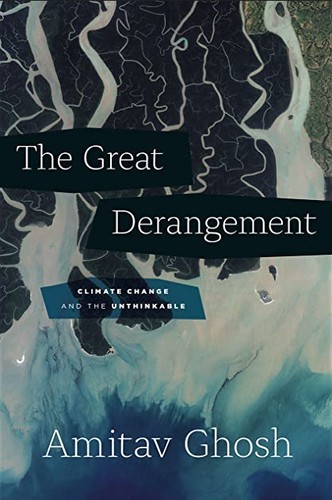
The Great Derangement: Climate Change and the Unthinkable
Amitav Ghosh · 2016
In this incisive work of literary and cultural criticism, Amitav Ghosh examines why societies have struggled to imagine—and adequately confront—the scale of climate change. Moving across literature, history, and politics, he explores how conventional narratives often fail to capture extreme weather, the tangled origins of the carbon economy, and the global consequences of environmental disruption. Ghosh argues that the climate crisis demands more than individual concern or incremental reform: it requires new forms of collective thinking and storytelling. Provocative and urgent, the book is a compelling call to use the imaginative power of fiction and culture to face the defining challenge of our age.
- 41
The Souls of Black Folk
W. E. B. Du Bois · 1903
4.0 · 1 ratingA landmark work of African American literature and social thought, this collection of essays examines the Black experience in the United States at the dawn of the twentieth century. Through history, personal reflection, spirituals, and penetrating social analysis, it explores the enduring effects of racism, the struggle for education and equality, and the search for identity in a divided nation. With its lyrical prose and influential concept of “double consciousness,” the book remains a powerful meditation on freedom, citizenship, and the unfinished American promise.
- 42
10 Judgements That Changed India
Zia Mody · 2013
3.0 · 1 ratingThis accessible introduction to India’s constitutional history examines ten landmark Supreme Court judgments that reshaped the country’s democracy and everyday life. Through cases involving secularism, the right to livelihood and shelter, the right to die, workplace sexual harassment, custodial deaths, reservations, and environmental protection, it shows how legal principles have evolved in response to urgent social questions. The book places each judgment in its historical and political context, clarifying complex concepts while tracing its broader impact on citizens and institutions. Written with the authority of an eminent lawyer, it offers an engaging guide to the foundations, tensions, and continuing influence of Indian law.
- 43
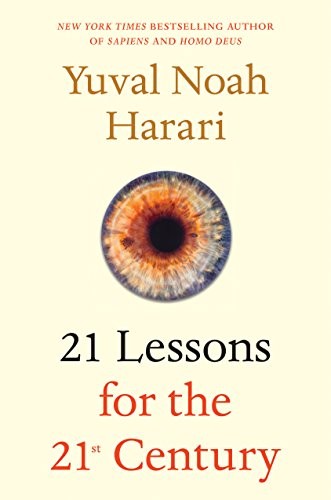
21 Lessons for the 21st Century
Yuval Noah Harari · 2018
4.0 · 1 ratingIn a rapidly changing world shaped by artificial intelligence, automation, biotechnology, political upheaval, and misinformation, this thought-provoking work asks how individuals and societies can remain resilient and relevant. Across five thematic sections, it examines the technological, political, social, and existential challenges confronting humanity, from the future of work and liberal democracy to nationalism, terrorism, education, and the search for meaning. Rather than offering simple predictions, it encourages readers to understand the forces reshaping the present so they can make wiser choices about the future. Combining sweeping historical perspective with philosophical inquiry and reflections on consciousness, responsibility, and meditation, the author delivers an accessible and provocative guide to navigating the uncertainties of the twenty-first century.
- 44
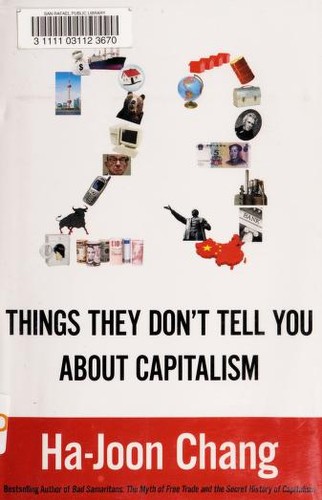
23 Things They Don't Tell You About Capitalism
Ha-Joon Chang · 2010
4.0 · 1 ratingIn this insightful exploration, Ha-Joon Chang dismantles the myths surrounding free-market capitalism, revealing the often-hidden realities of global economic dynamics. Through compelling examples and rigorous analysis, the book challenges conventional wisdom on topics ranging from free trade and regulation to the true drivers of economic growth. Chang argues that the "free market" is a carefully constructed system, not a natural phenomenon, and that government intervention and protectionist policies have historically been crucial for the prosperity of developed nations. Ultimately, the book offers a thought-provoking perspective on how capitalism can be reshaped to serve more humane and equitable ends.
- 45
A Better India: A Better World
N. R. Narayana Murthy · 2009
This thoughtful collection of essays and speeches explores how India can unlock its vast potential through ethical leadership, quality education, strong institutions, and inclusive economic growth. Drawing on decades of experience in business and public life, the author examines the challenges facing a rapidly changing nation—from corruption and inadequate infrastructure to social inequality and global competition. The book presents a persuasive vision of progress rooted in transparency, innovation, civic responsibility, and opportunity for all. Clear-eyed yet hopeful, it offers both a diagnosis of India’s shortcomings and a practical call to action for building a stronger country and a better world.
- 46
Academic Profiling: Latinos, Asian Americans, and the Achievement Gap
Gilda L. Ochoa · 2013
This incisive study examines how race, class, language, immigration, and school practices shape the educational experiences of Latino and Asian American students. Drawing on research in California schools, it reveals how educators’ assumptions and institutional policies can create forms of “academic profiling,” influencing students’ placement, opportunities, and expectations. The book challenges simplistic achievement-gap narratives and the model-minority stereotype by highlighting the diversity within both communities and the structural forces behind unequal outcomes. Accessible and deeply researched, it offers a compelling account of educational inequality and the possibilities for more equitable schools.
- 47
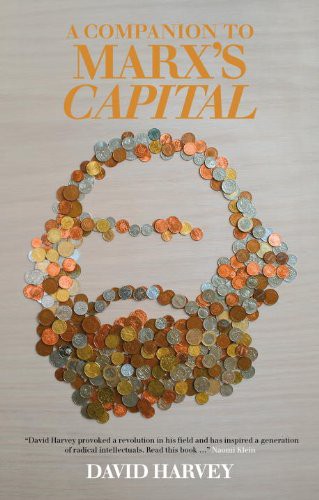
A Companion to Marx's Capital, Volume 1
David Harvey · 2010
This accessible guide offers a lucid, chapter-by-chapter exploration of the arguments, concepts, and methods developed in Marx’s *Capital*, Volume 1. It clarifies challenging ideas—including commodities, surplus value, labor, technology, and the dynamics of capitalist production—while showing how they fit into Marx’s broader critique of political economy. Drawing on a close reading of the original text, the book connects nineteenth-century analysis to contemporary questions about markets, work, inequality, and economic power. Scholarly yet engaging, it is an ideal companion for newcomers and a valuable resource for readers seeking a deeper understanding of Marx’s enduring significance.
- 48
A Cyborg Manifesto: Science, Technology, and Socialist-Feminism in the Late Twentieth Century
Donna J. Haraway · 1985
In this influential essay, Donna J. Haraway uses the cyborg—a hybrid of organism and machine—as a provocative metaphor for rethinking identity, embodiment, and power in a technologically shaped world. Challenging rigid boundaries between human and animal, organism and machine, and nature and culture, she critiques essentialist ideas of gender and traditional feminist politics. Drawing on socialist-feminist theory, science studies, and critiques of technoscience, the work advocates imaginative, coalition-based approaches to social change. Bold, challenging, and intellectually original, it remains a landmark text in feminist theory and the study of technology and culture.